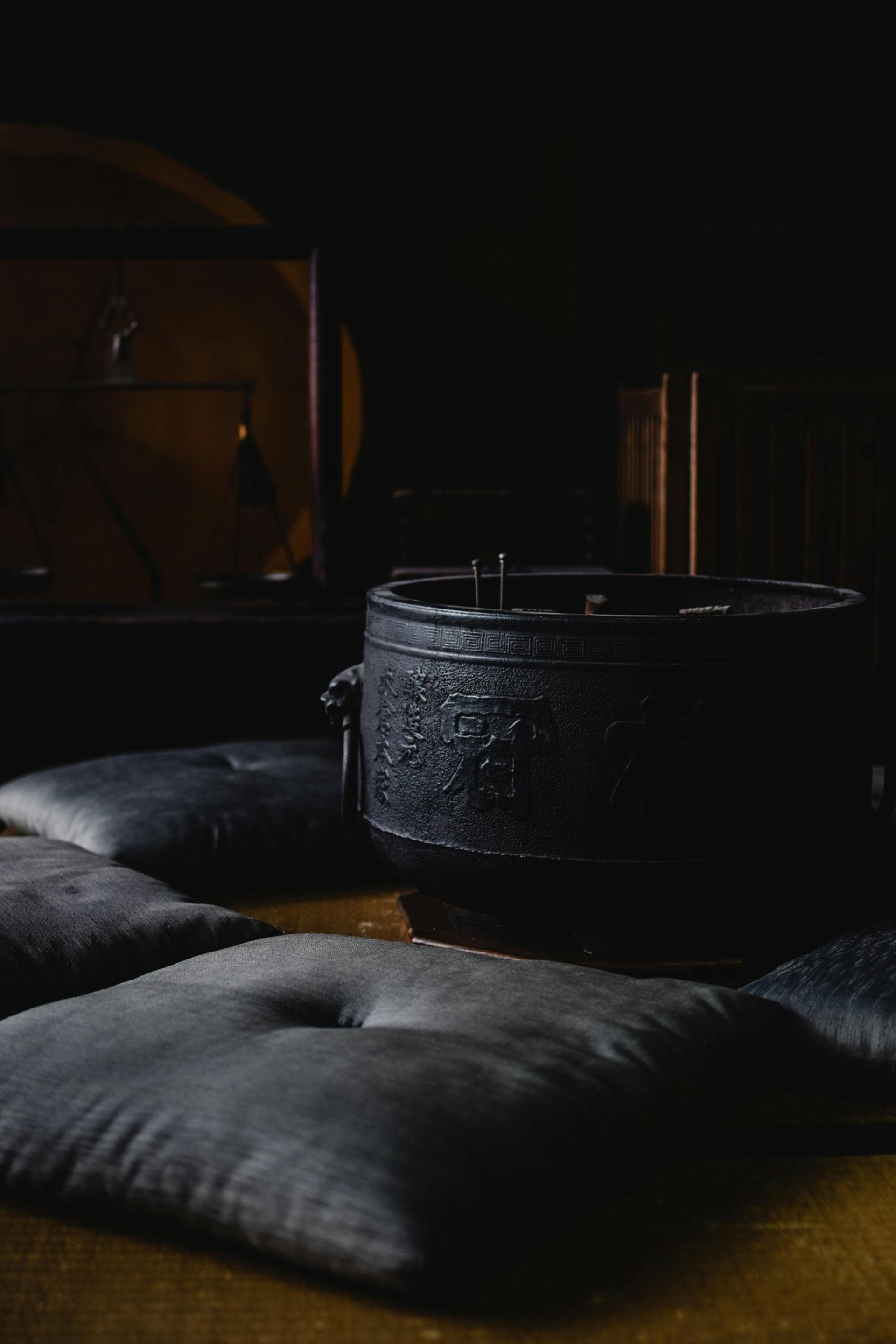
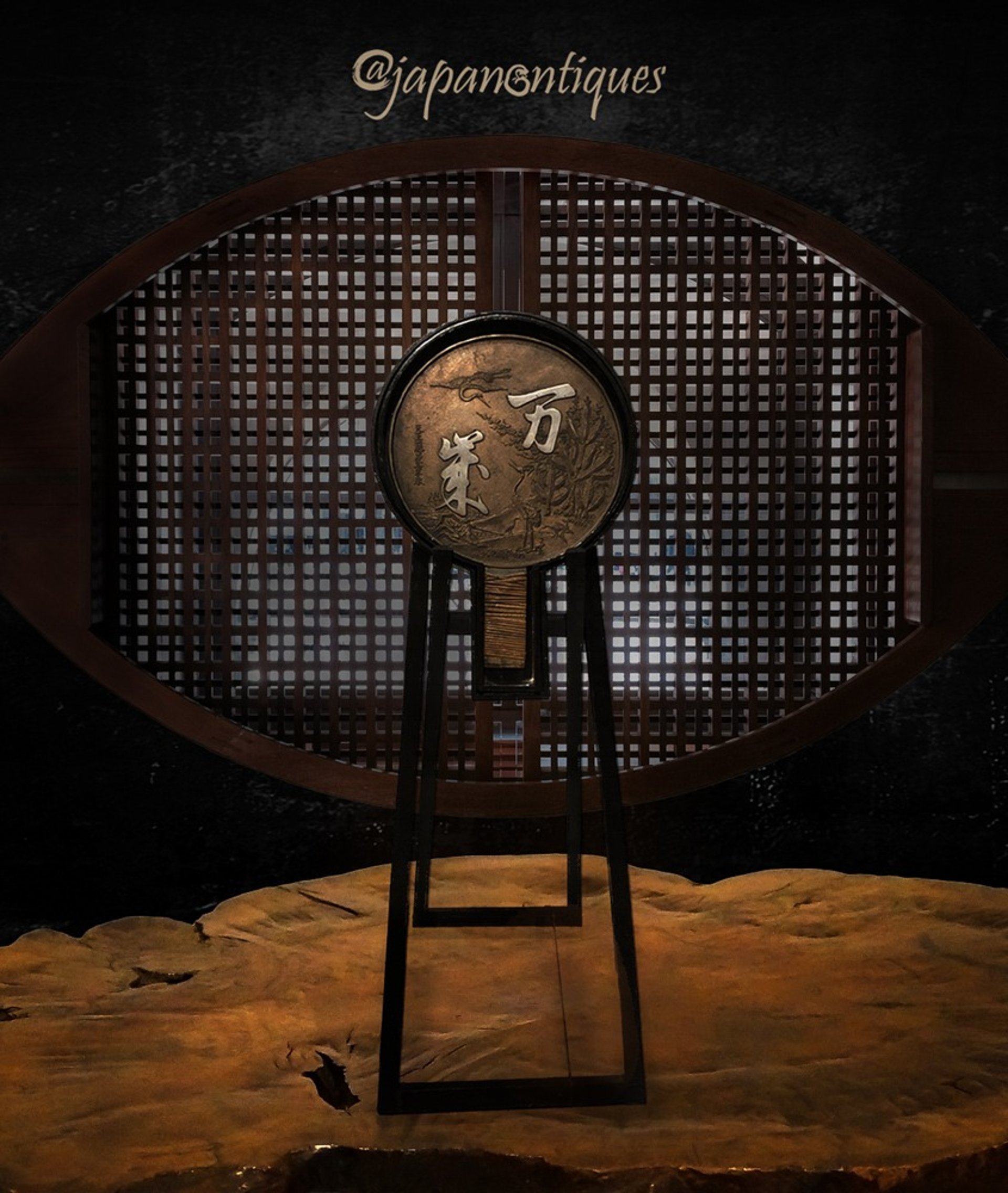
Antique Japanese Daikoku Jizai (Hearth Hanger)
Keyaki hearth hanger in the traditional Daikoku form, with old lacquer and traces of use · Late Edo period (c. 1800s–1868s).
This antique Japanese jizai was sourced in Japan and selected for its craftsmanship, history, and quiet presence.
ABOUT THIS PIECE
This powerful old Japanese jizai (自在) once formed part of the adjustable suspension system used above an irori, the traditional sunken hearth at the centre of the Japanese home.
Carved from a substantial piece of keyaki, it belongs to the Daikoku form of jizai, distinguished by its broad upper section and deeply curved profile. The shape is traditionally associated with the distinctive hat of Daikoku, one of Japan's Seven Gods of Good Fortune. British Antique Dealers' Association
The keyaki retains an old dark lacquered surface that has been extensively worn through generations of handling and use. Scratches, rubbed areas, small losses and passages of warmer exposed wood overlap across the surface, creating an exceptionally rich and complex patina. These are not merely signs of age: they preserve the working history of an object that spent many decades beside the household hearth.
Its bold silhouette, old lacquer and deeply worn surface give the piece a particularly strong wabi-sabi character. Removed from its original practical context, it also has a remarkably modern sculptural presence.
CULTURAL NOTE
The jizaikagi (自在鉤) was the adjustable suspension system installed above the traditional Japanese irori. It allowed cooking vessels and kettles to be raised or lowered over the fire. The carved wooden element of these systems could become much more than a purely functional component, and old examples are now appreciated as an important expression of Japanese folk art or mingei. British Antique Dealers' Association
Two particularly characteristic forms became associated with Ebisu and Daikoku, two of Japan's Seven Gods of Good Fortune. The simpler, strongly hooked or J-shaped form is traditionally known as Ebisu, while the broader and more elaborate form, recalling the shape of Daikoku's hat, is known as Daikoku. British Antique Dealers' Association
The association was particularly meaningful around the hearth. Daikoku was connected with agriculture, abundance and prosperity, while Ebisu was associated with fishing and good fortune. Both became closely connected with the well-being of the household and the provision of food—an especially appropriate symbolism for an object positioned above the fire where meals were prepared.
DELIVERY
Delivery is included in the prices shown for Europe, the United States and Japan. For other destinations, please contact us for a delivered price.
Secure, reinforced packaging with tracking.
Note: Import duties or taxes may apply depending on the regulations of the destination country. For items over 100 years old, reduced import duties or taxes may apply in some countries. On request, we can provide a certificate stating the item’s estimated age to assist with customs clearance.


DETAILS & PRICE
SKU: A191
Price:
Europe: €850 — delivery to Europe included
United States: US$980 — delivery to the USA included
Japan: ¥88000 — delivery within Japan included
Material: Keyaki (Japanese zelkova)
Period: Late Edo period (c. 1800s–1868)
Origin: Japan
Features:
Daikoku-form jizai; carved keyaki construction; old dark lacquer; deeply worn surface; extensive traces of use and rich aged patina
Dimensions: W 26 × D 10 × H 32 cm (10.2 × 3.9 × 12.6 in)
Condition:
Good vintage condition, with natural irregularities, cavities, surface variations and age-related wear consistent with its age and construction.
Reserve or enquire about this piece
Each piece is unique.
You may reserve this item or enquire for further details.
We will confirm availability and provide a secure payment link if you wish to proceed.
No payment is required at this stage. Reservations are held for 24 hours.